About Pauline
Pauline van Dongen is a Dutch fashion designer specialised in wearable technology. As a creator intrigued by the notion of interactivity in fashion, she researches the human body in relation to its surroundings. She is fascinated by concepts of change, movement, energy and perception, as she believes the future of fashion lies in its premise to be dynamic and changing.
Pauline van Dongen collaborated with Christiaan Holland from the HAN University of Applied Sciences and solar energy expert Gert Jan Jongerden on the Wearable Solar project, which aims to integrate photovoltaic technology into comfortable and fashionable clothing. In this range of clothing flaps open up to reveal solar panels, enabling the wearer to become a walking mobile phone charger.

Wearable solar dress 2014
The dress features 72 flexible cells attached to panels on the front of the garment that can be folded outwards to capture sunlight. Forty-eight rigid crystal solar panels are incorporated into leather flaps on the jacket’s shoulders and waist so they can be revealed when the sun shines and hidden when not in use. A standard charging plug connects the solar panels directly to a mobile device, and Van Dongen claimed that a garment exposed to direct sunlight for one hour could capture enough energy to charge a typical smartphone to 50 percent capacity.
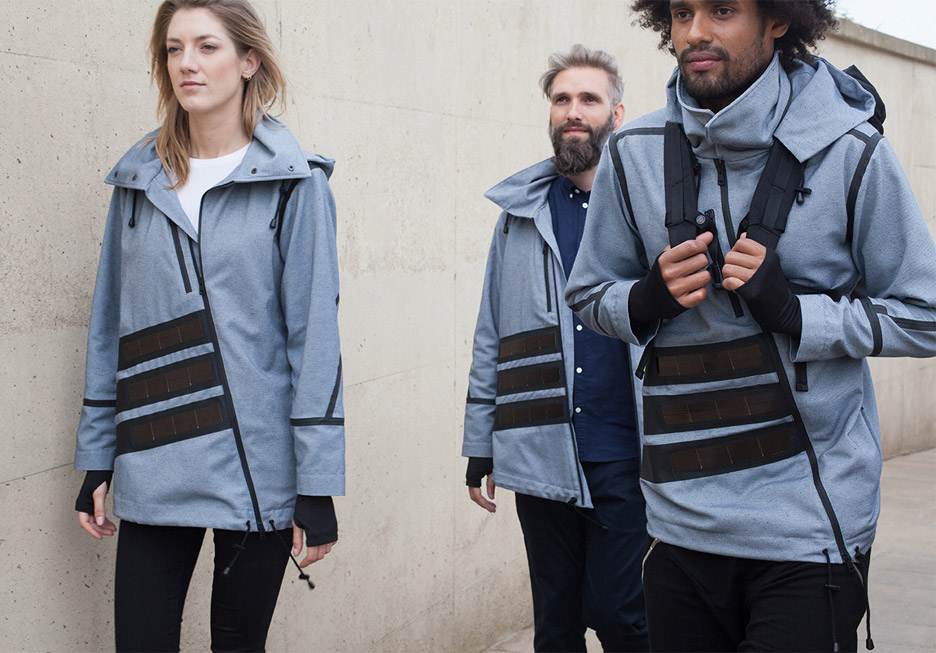
Solar windbreaker 2016
Pauline van Dongen has created more clothing with integrated solar panels, designing a windbreaker that can charge wearers’ phones and GPS devices. The water-resistant jacket is made from recycled denim yarn provided by Blue LOOP Originals, and has a hood that can be concealed within a zipped collar.
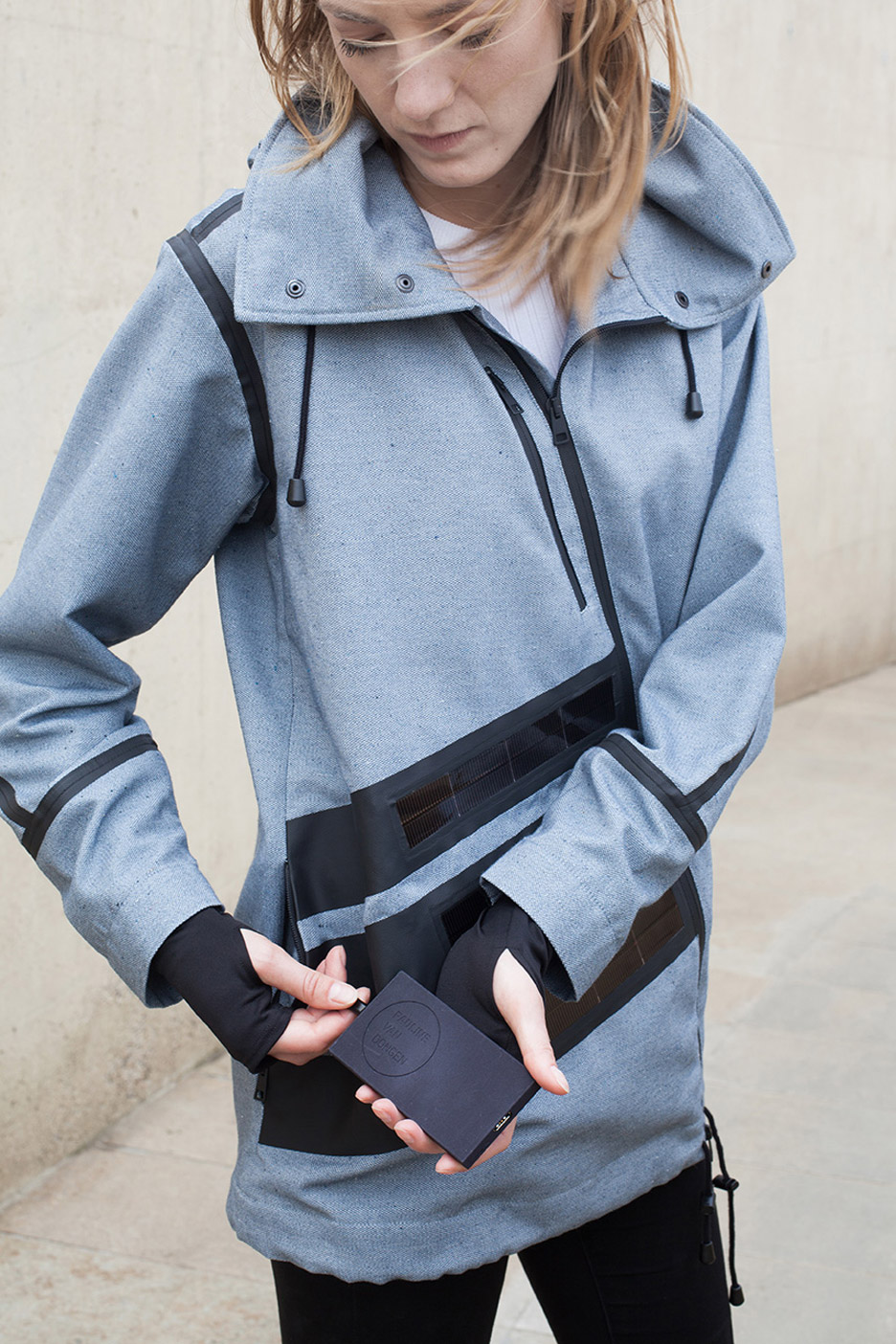
Three flexible solar panels are incorporated into the front of the jacket, so guides can still wear backpacks, and an internal power bank can store enough energy to charge a phone within two hours. An inductive charging system allows wearers to charge devices, where possible, wirelessly. The garment has been created for tour guides – known as Wad Walkers – working on the Wadden Sea Islands nature reserve in the Netherlands, who often spend up to ten hours hiking outdoors and off the grid. At low tide, the Wadden Sea recedes to reveal vast areas of mud flats, which the guides help hikers explore.

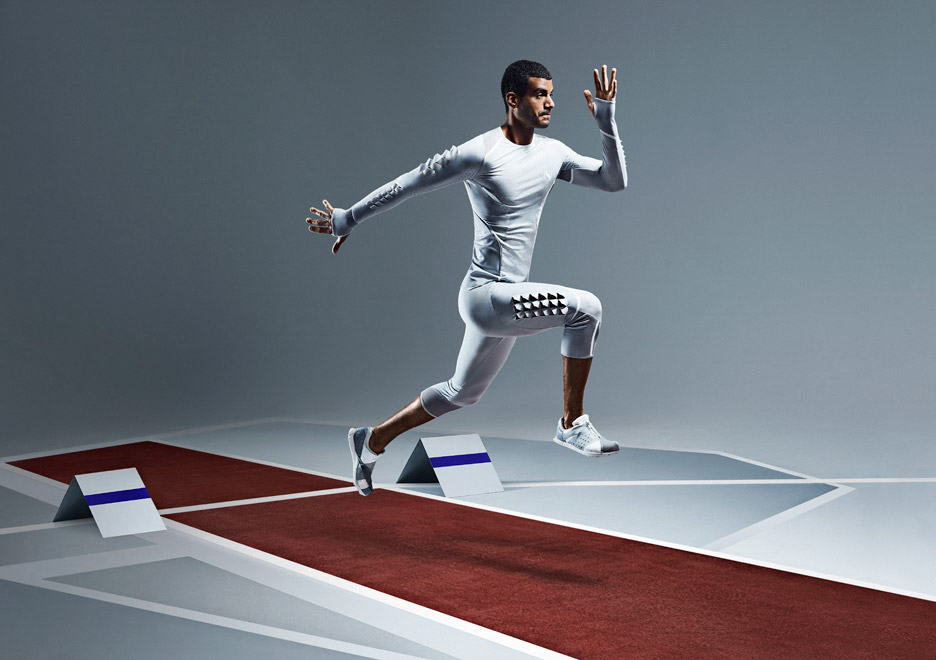
Skynfeel apparel 2016
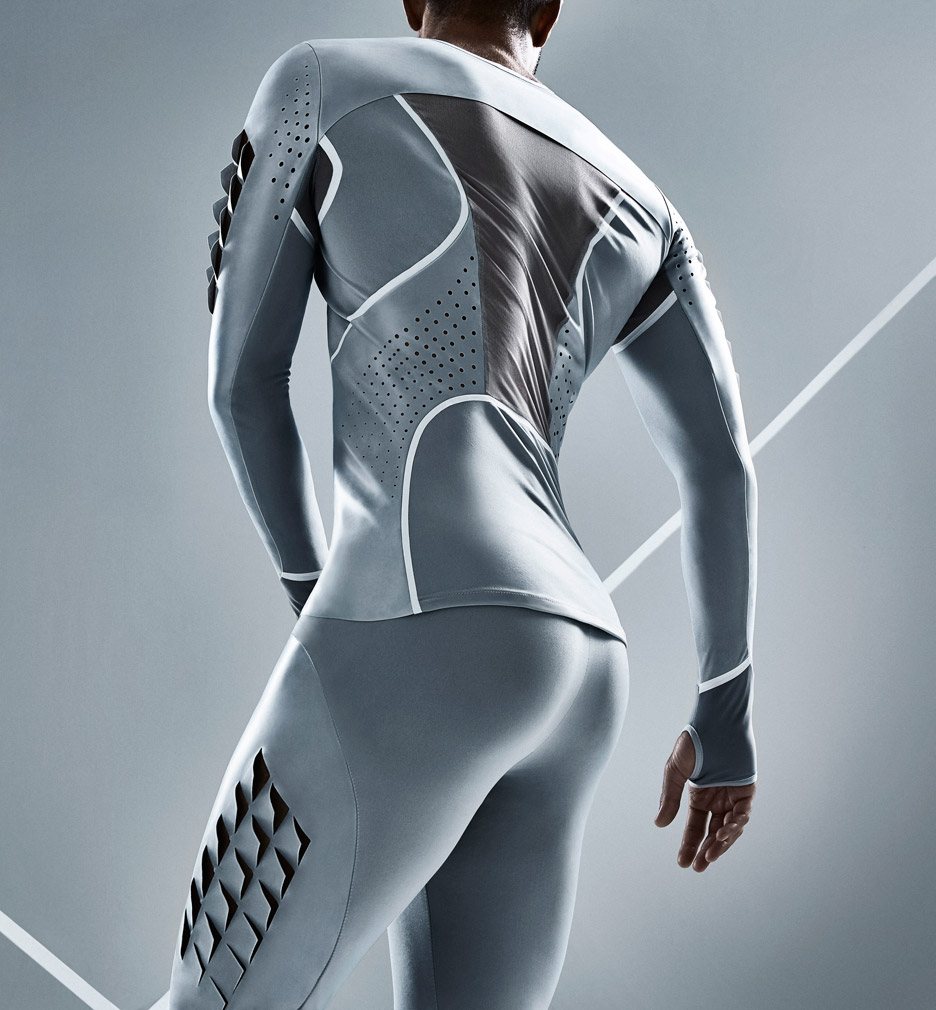
Pauline van Dongen has created experimental athletics apparel from the same material that contraceptives brand Skyn uses to make its condoms. Van Dongen’s proposal re-appropriates the company’s Skynfeel material, which is made from polyisoprene – an alternative to latex that is claimed to provide the same strength but with a softer, more natural feel. It is used to create thinner condoms for increased sensitivity, and is safe to be worn by those with latex allergies.
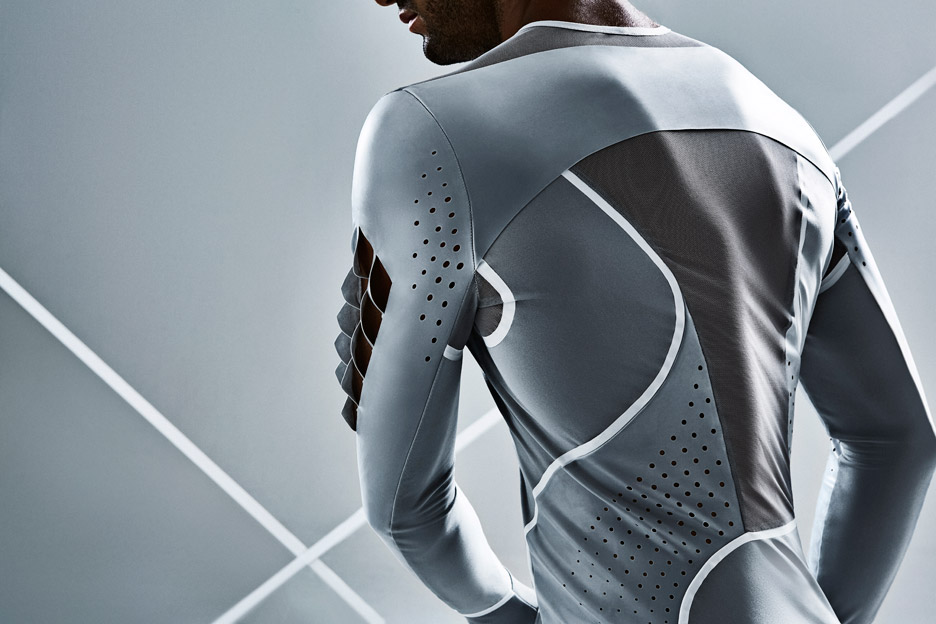
The result is the Skynfeel Apparel jumpsuit, designed specifically for long-jumpers to help increase their aerodynamics and fly further through the air. “What struck me about the Skenfeel material is that it’s super-elastic, super-lightweight and super-strong all at once,” said the designer. The flaps stay flat during the athlete’s run-up, then open up after take-off to provide an upward lift that could extend time in the air. “We custom made an experimental suit for long jumpers to explore the possibility that our material could actually improve an elite athlete’s performance.”

Fysiopal 2016
Pauline van Dongen has created a smart top that vibrates in response to bad posture. FysioPal is a shirt designed to correct bad upper-body posture by alerting the wearer when they are slouching. Dongen worked alongside tactile displays company Elitac to create FysioPal, which contains sensors that pairs with a smartphone app.

Designed to be worn as an undershirt, the top measures the position of the neck, shoulders and back. These measurements are then sent to the app, which visualises the data and assesses the wearer’s overall posture. If it detects a slouch, the top will softly vibrate, alerting the wearer to change how they are sitting or standing.
Photography: Mike Nicolaassen, Roos van de Kieft and Wouter le Duc.
Parts of the text from Dezeen.