
This year at the DDW we were inspired by the work of Jessica den Hartog. Every year Dutch Design Week (DDW) takes place in Eindhoven in October. The biggest design event in Northern Europe presents work and ideas of more than 2500 designers to more than 295,000 visitors from home and abroad. The DDW is different from other design events, because it concentrates on the designs of the future.
About Jessica
Jessica den Hartog (24), is a Dutch designer who graduated at the Academy of Art (MAFAD) in Maastricht. She looks to the society for inspiration. Studying many associations and (other) social institutions and reshaping their activities. Letting development take place by providing a new perspective.
As a designer she studied the society, which consists of many associations. During the research, the process is equally as important as the results. By going through the process step by step and experimenting with intuition and materiality, a specific result is obtained. She sees herself as a designer of interconnection; by working together with other disciplines and employing each other’s knowledge and talent, new perspectives can be gained for future developments.
Recolored, a new way of recycling
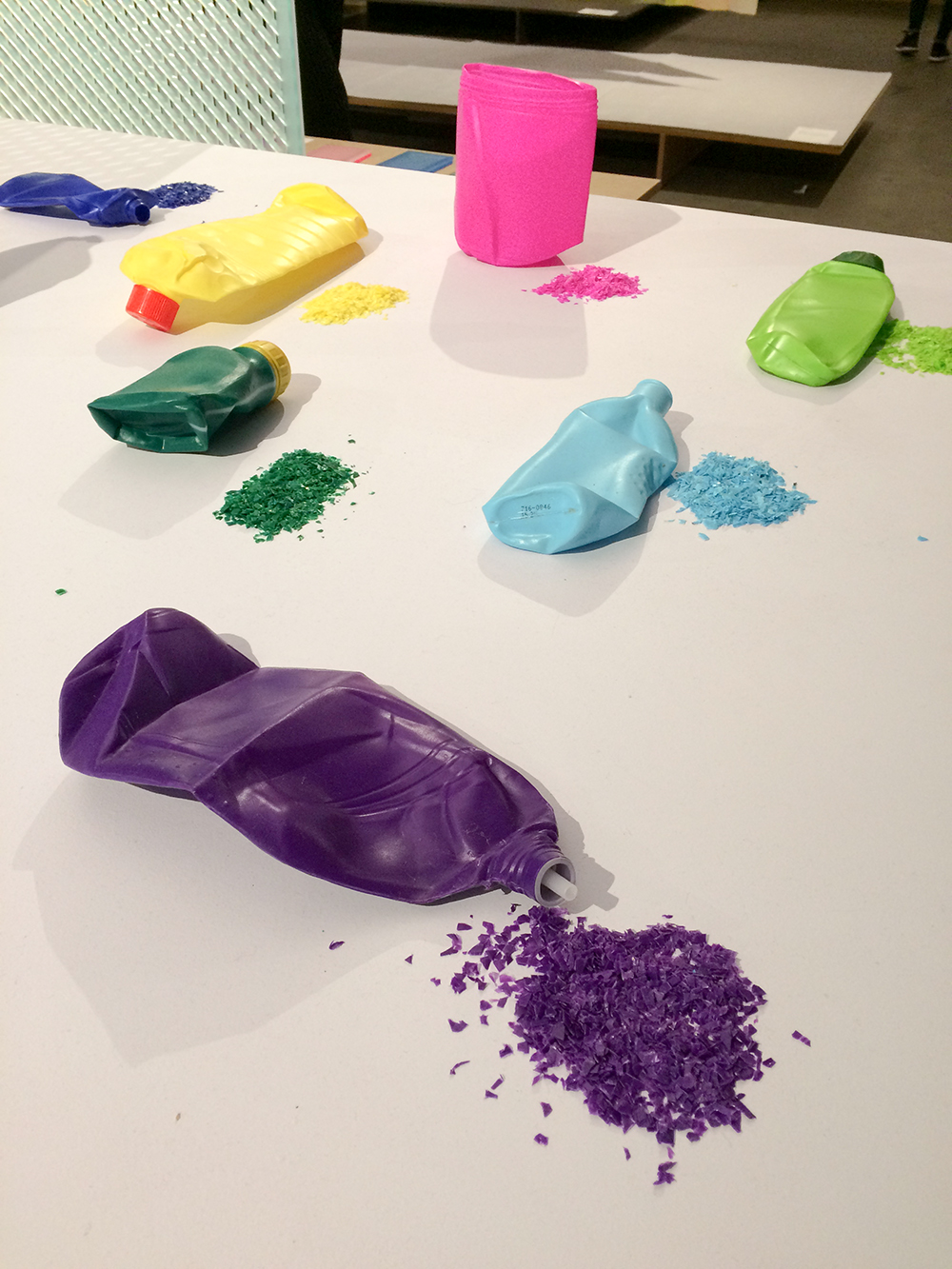
Within the plastic recycling industry, no distinction is made between the color of the plastic. All colors of a type of plastic are recycled together, making it into a gray raw material (regranulate). For Jessica as a designer a huge limitation. Out of a fascination for the material and the lack of aesthetics within it’s recycling proces, she started her own research. A study to give a personal interpretation of the countless possibilities of the plastic material, which is seen as ‘waste’.
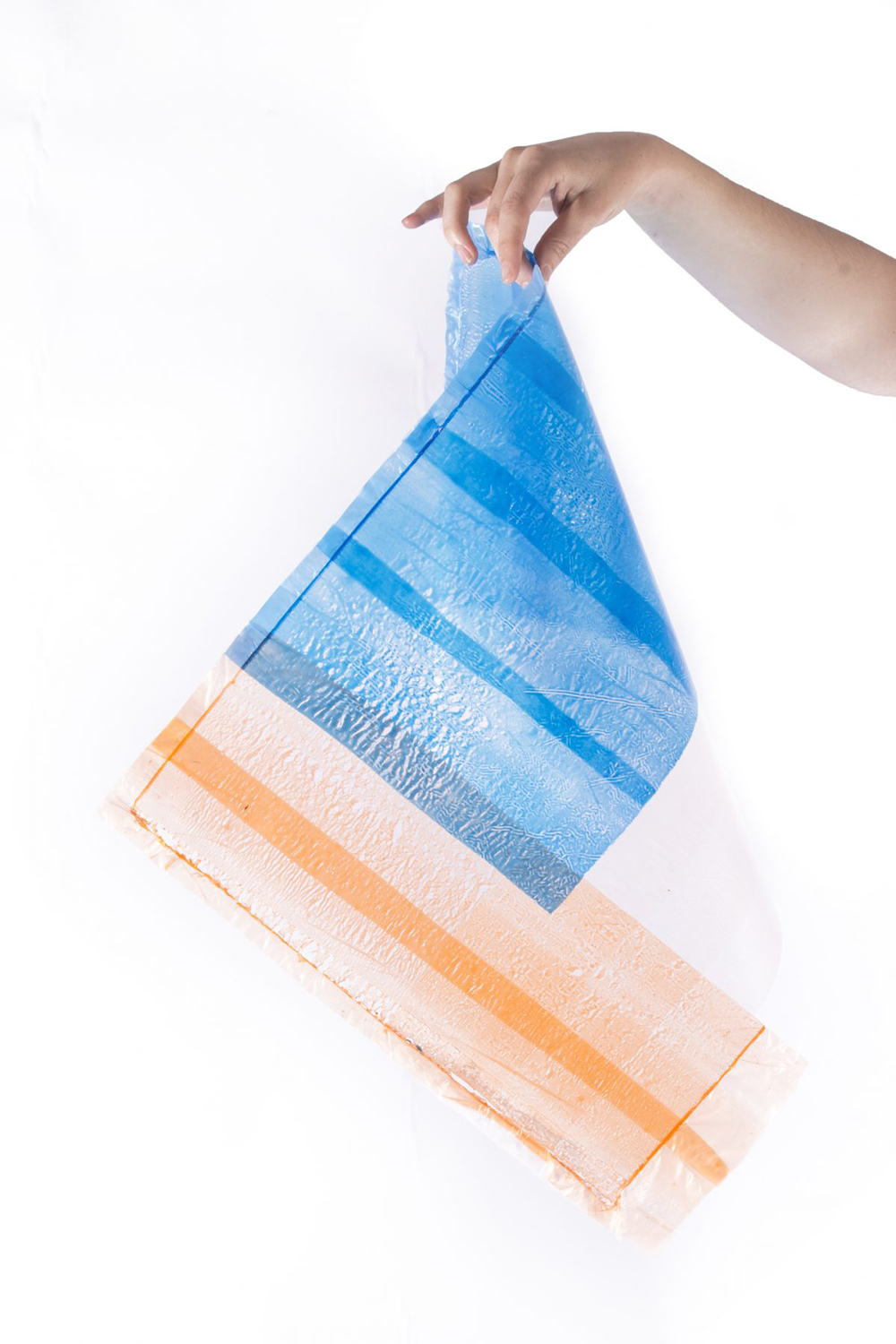
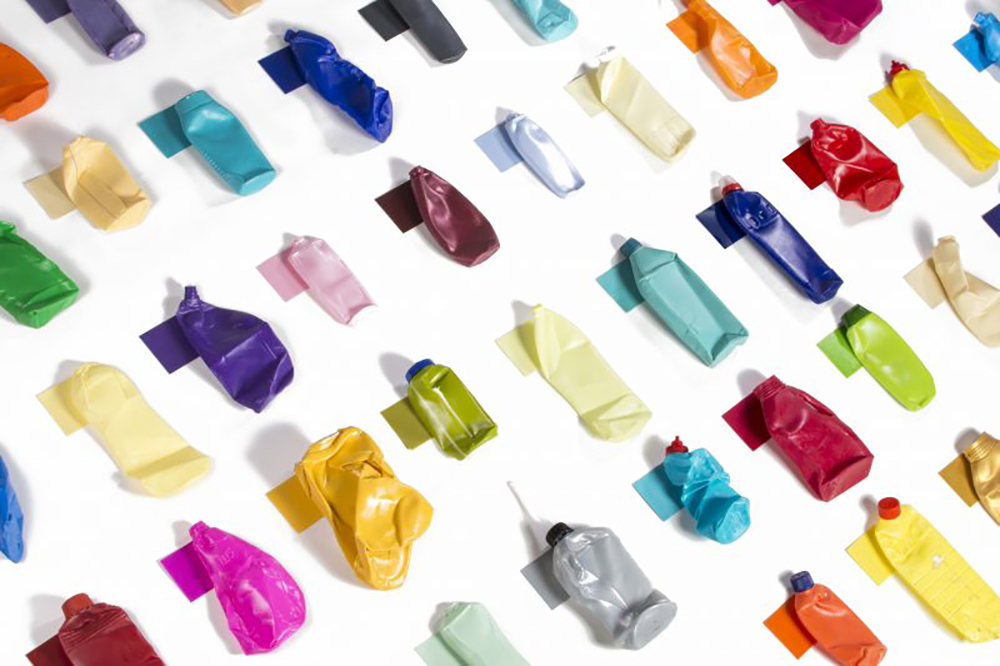
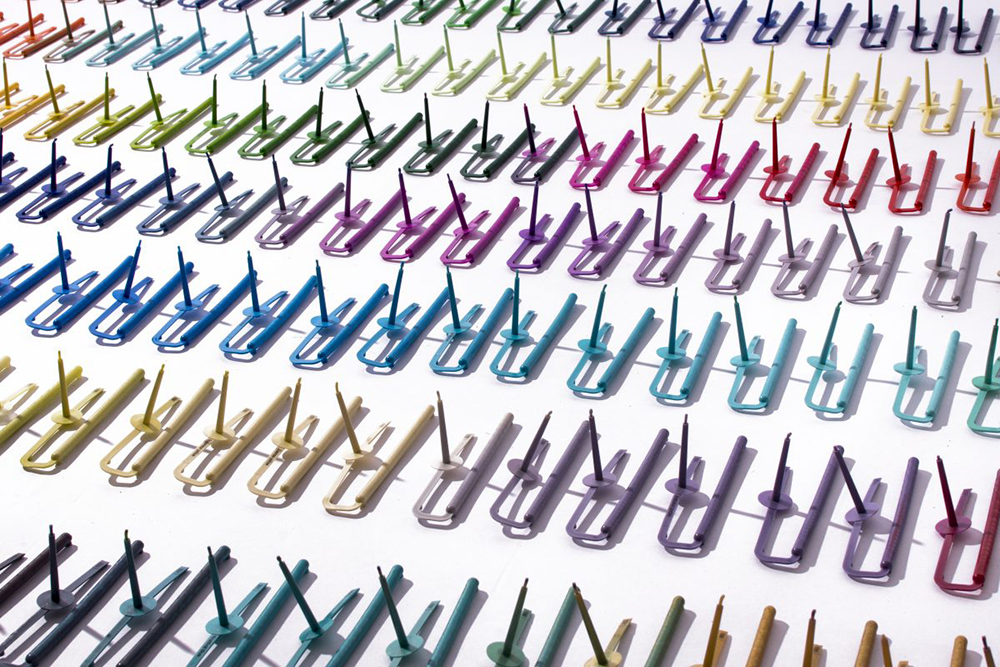
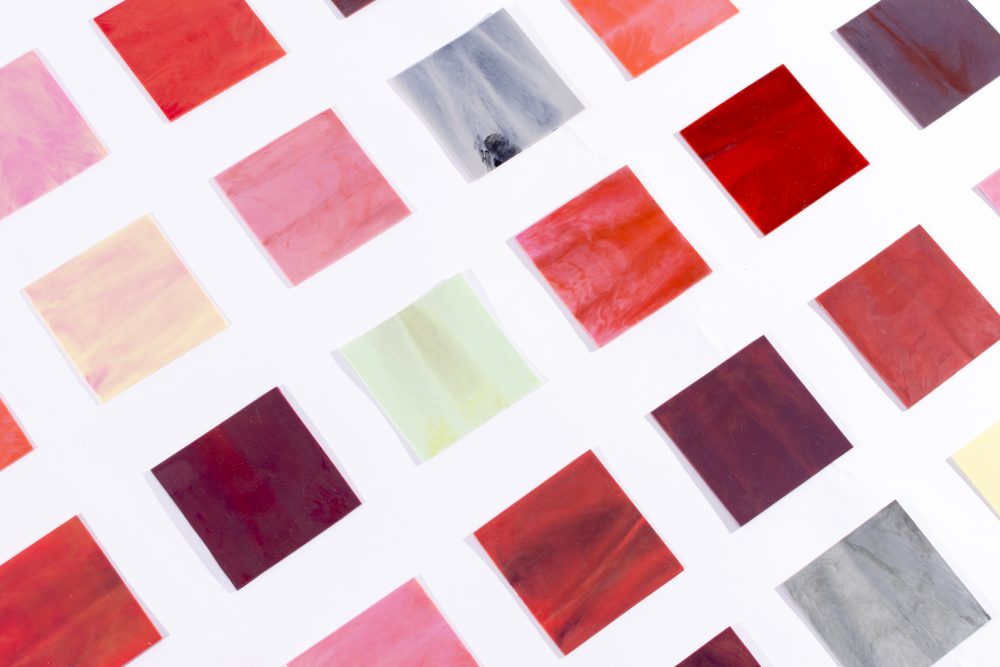
A material with it’s own quality and identity, originating from experiments with material, color and technique. She started from a bag of HDPE plastic, coming from people’s homes, but compressed by the industry consists of bottles that we have in our hands every day. Andrelon, Nivea, Glorix, etc. In collaboration with the industry she separated all the colored bottles from a bale in aesthetics materials with different properties like: hard, soft, flexible, stiff, etc. All bottles were sorted, washed and recycled by color, this gave a palette of 51 colors.

Labwork
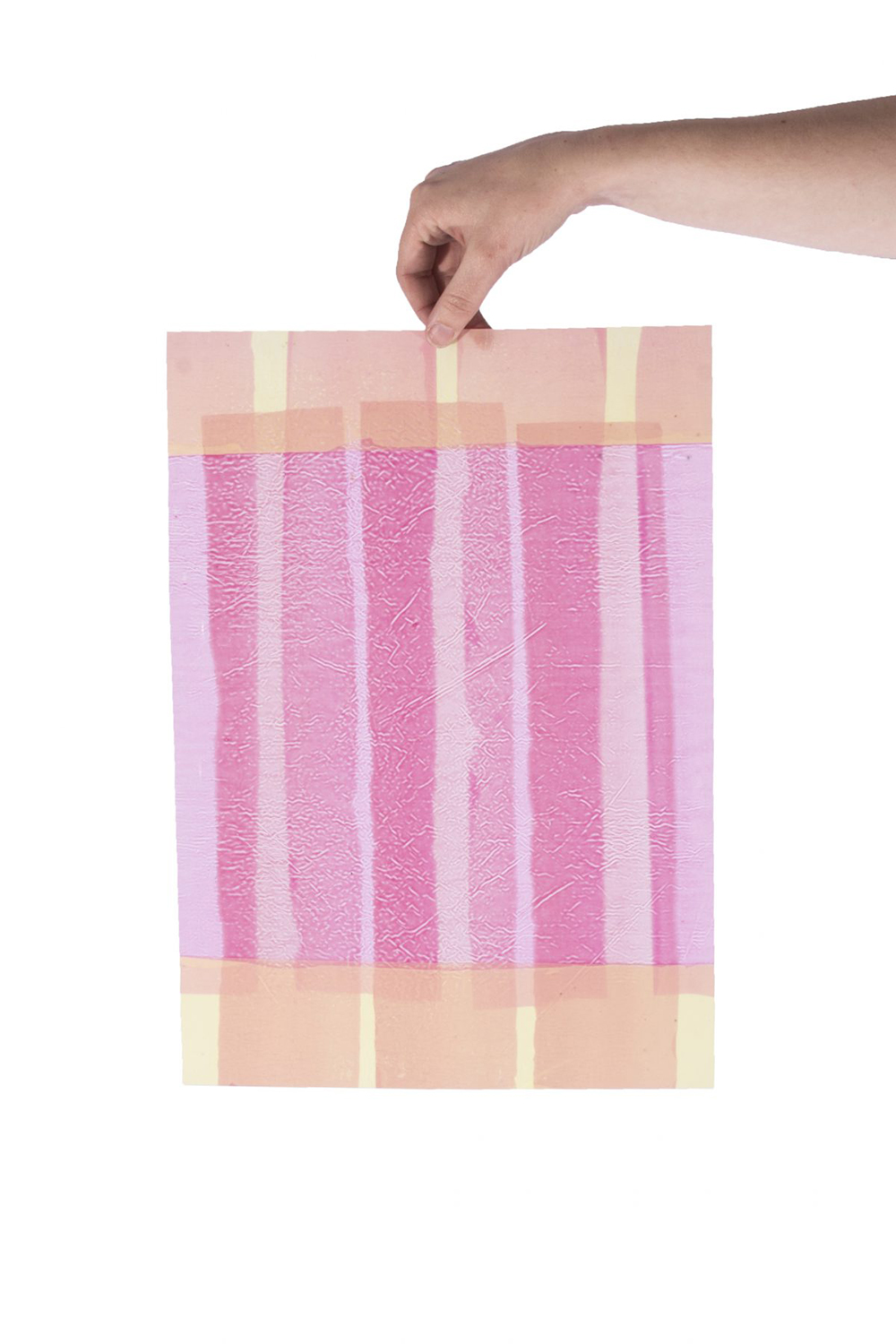
Jessica researched the material in a lab. Working with industrial machines such as injection molding, foil blowing, filament melting and pressing. It gave her the opportunity to find the limits of usability and of the experiment itself.

Future use
The research will serve as a library of colors and materials in a never-ending process. The ways in which materials and colors are used in the process will most likely change in future. Existing materials will be shredded and those fragments eventually will be processed into a new material. Color will be determined by materials of products that already exist. They won’t be completely pure anymore but will be created, because they are endlessly mixed to new colors. This new way of producing will create a need for new color systems.
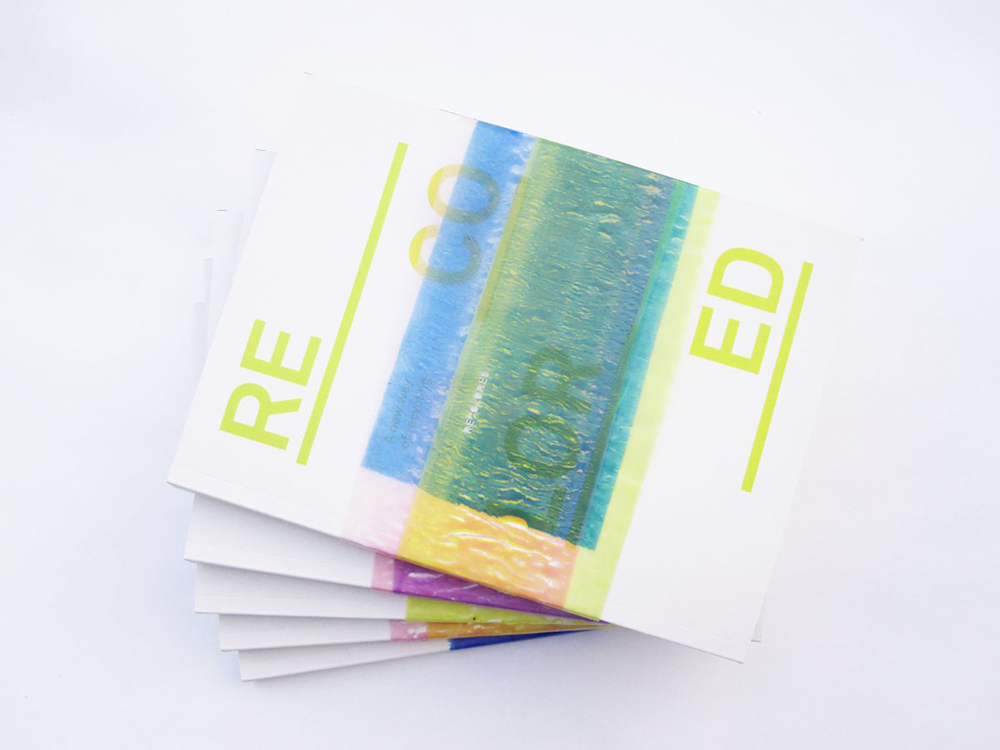
The research is bundled in the book Recolored, A new way of recycling.

Parts of the text and photos from Jessica den Hartog.

